AI Care Navigator - UX Case Study
Client
AI Care Navigator
Year
2025
AI Care Navigator
Empowering patients to feel in control of their healthcare journey, not overwhelmed by it.
Role | Duration | Team | Platform |
|---|---|---|---|
UX Designer | 8 Weeks | 3 Members | Web App |
An AI-powered healthcare companion that transforms complex medical information into clear, actionable guidance helping patients understand visits, prepare smarter questions, and follow personalized care plans.
Links Section:
Scope of Work

AI Care Navigator addresses a critical gap in healthcare:
73% of patients leave appointments confused, and 45% miss follow-ups. Our team of 3 designers tackled this over 8 weeks, conducting 24 user interviews and 156 survey responses.
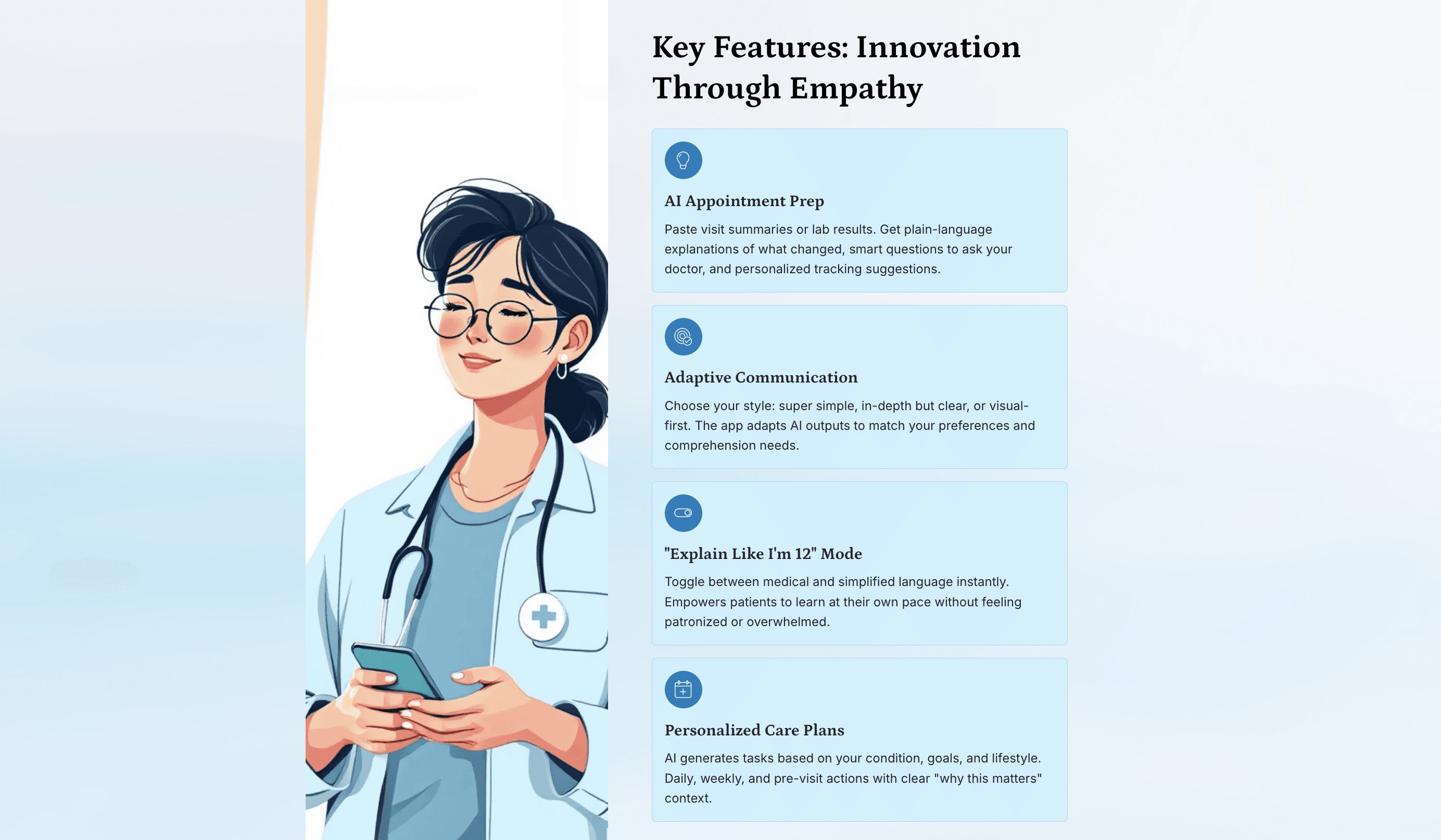
The solution provides three core features:
Plain-language visit summaries that eliminate medical jargon
AI-generated questions tailored to patient history and concerns
Personalized care plans with medication tracking and daily tasks
This collaborative project was built using Lovable, a modern web development platform. The full interactive case study showcases our research process, personas, information architecture, wireframes, and final high-fidelity designs.
Problem & Context
Design challenge:
How might we help chronic-care patients understand, prepare, and follow through on their care without needing medical training?

Users & Goals
Primary user
Chronic care patient (e.g., Type 2 diabetes, PCOS, depression), 22–55, digitally literate, often juggling multiple portals (hospital, lab, pharmacy).
User Goals
See clear, simple explanations of their visit and labs
Prepare smarter questions before the appointment
Turn the care plan into small daily/weekly actions
Feel in control, not lost
Product Goals
Reduce cognitive overload after visits
Drive better appointment conversations
Build trust in AI by keeping users in control of the content




Reflection
This project reinforced for me that effective healthcare UX is as much about emotional safety as it is about clean UI. Through testing, I saw that the biggest shift for patients was not just “understanding” their data, but feeling less afraid of it. When users could control how information was explained and move at their own pace, they described appointments as calmer, more focused, and easier to prepare for. That insight now shapes how I design any AI-driven experience: the interface should lower anxiety before it shows off intelligence.
If I were to take AI Care Navigator further, I would focus on deeper integration into real clinical ecosystems. The next steps include connecting with existing patient portals, adding medication tracking and interaction warnings, and designing a dedicated caregiver view so families can support shared care without overwhelming the patient. I would also prioritize multilingual support and partnerships with healthcare systems for structured pilots, allowing us to validate outcomes like appointment preparedness, adherence to care plans, and patient confidence over time.